Home → Maui Guidebook → 7 Days in Maui Whale Season: Unique Experiences for Every Visitor
Quick Summary: 7 Days in Maui Whale Season
Humpback whale season runs December through April, and there is no better week to be on this island. Here is what seven days on the water looks like:
• Day 1: Arrive, get your bearings, and spot your first whale from shore, no boat required
• Day 2: Book a classic whale watch on a large catamaran for the full season-opening experience
• Day 3: Trade up to a small raft for a wilder, more intimate encounter with the humpbacks
• Day 4: Paddle out at sunrise and watch them surface from your board, the experience most visitors don’t know they can have
• Day 5: Snorkel and hear them singing beneath the surface
• Day 6: Contribute to whale science through the annual whale count or the Happy Whale citizen science project
• Day 7: Send the week off on a sunset cruise with humpbacks as the backdrop
There Is No Week in Maui Quite Like a Whale Season Week
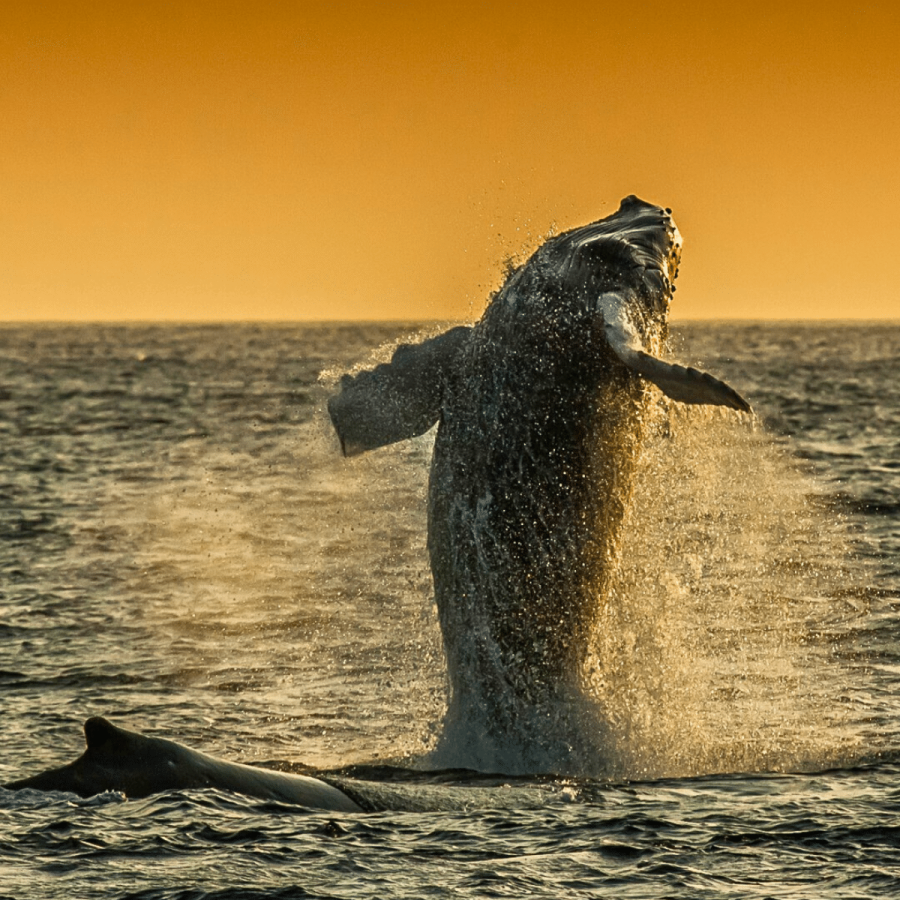
Every season in Maui has something special. But whale season occupies a category of its own. From November through April, an estimated 10,000 humpback whales make the warm waters of the Au’au Channel their winter home, arriving from Alaska to breed, give birth, and raise their calves in one of the most remarkable natural migrations on earth.
What that means for visitors is this: at almost any point during your trip, from the moment you step onto the beach to the last evening on the water, you are in the presence of something extraordinary. Whales breach off the coastline while you have breakfast. They surface beside boats. Humpbacks sing in other-worldly sounds that carry through the water while you snorkel. They’ll spout spray visible from the highway as you drive past.
This guide is built around a week that takes full advantage of that. Not every activity requires a tour. Not every experience requires getting on a boat. Some of the most memorable whale encounters on Maui happen with nothing but your own eyes, a paddleboard, or a snorkel mask. This week layers all of it, from the classic experiences to the ones most visitors don’t know to look for.
Day 1: Arrive, Orient, and Spot Your First One From Shore
Your first whale sighting on Maui often happens before you have even made a plan. That is part of what makes whale season feel electric from the moment you land.
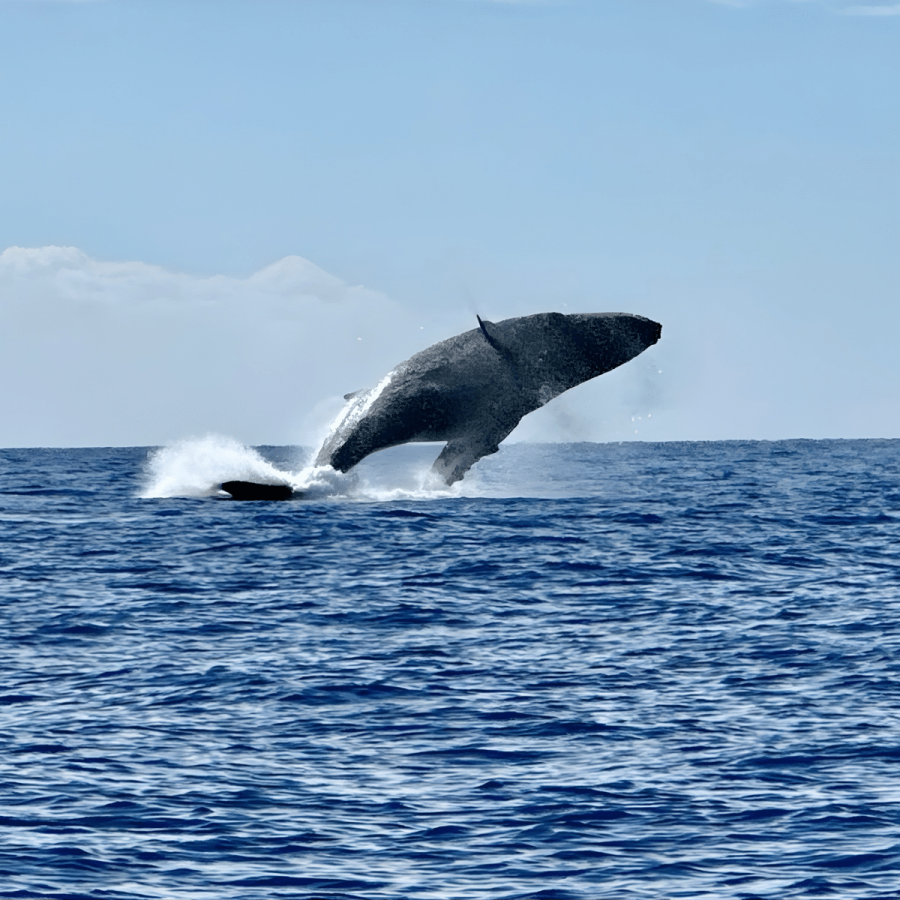
After you settle in, make your way to the beach, any beach along South or West Maui will do, and give yourself thirty minutes to just watch the horizon. December and early January bring the first arrivals of the season, and even in the opening weeks, whales are frequently visible from shore. Look for the blow first: a small puff of mist that appears and disappears quickly, usually 50 to 200 feet above the surface. Then watch for the arc of a back rolling through the water, the flick of a fluke before a dive, or if you are fortunate, the full dramatic breach of a whale launching itself out of the ocean entirely.
Panoramic View from the Papawai Scenic Lookout
The Papawai Scenic Lookout along the highway between Maalaea and Lahaina is one of the best shore-spotting locations on the island and is designated as an official whale sanctuary lookout. The cliffs give you elevation and a wide view of the channel. In peak season, it is not unusual to see multiple animals from the same spot in a single session.
For a quieter onshore experience, the beaches of South Maui from Kamaole down through Wailea face directly into the channel and offer long, unobstructed views. Bring binoculars if you have them. The activity you see from shore will also give you a good read on what to expect when you get on a boat.
🐋 Day 1 tip: Scan the water in a slow, methodical pattern rather than staring at one spot. Spouts are brief and easy to miss if you are waiting for a full breach.
Day 2: Get on the Water – The Classic Whale Watch Tour
If Day 1 is about understanding where you are, Day 2 is about getting into the middle of it.
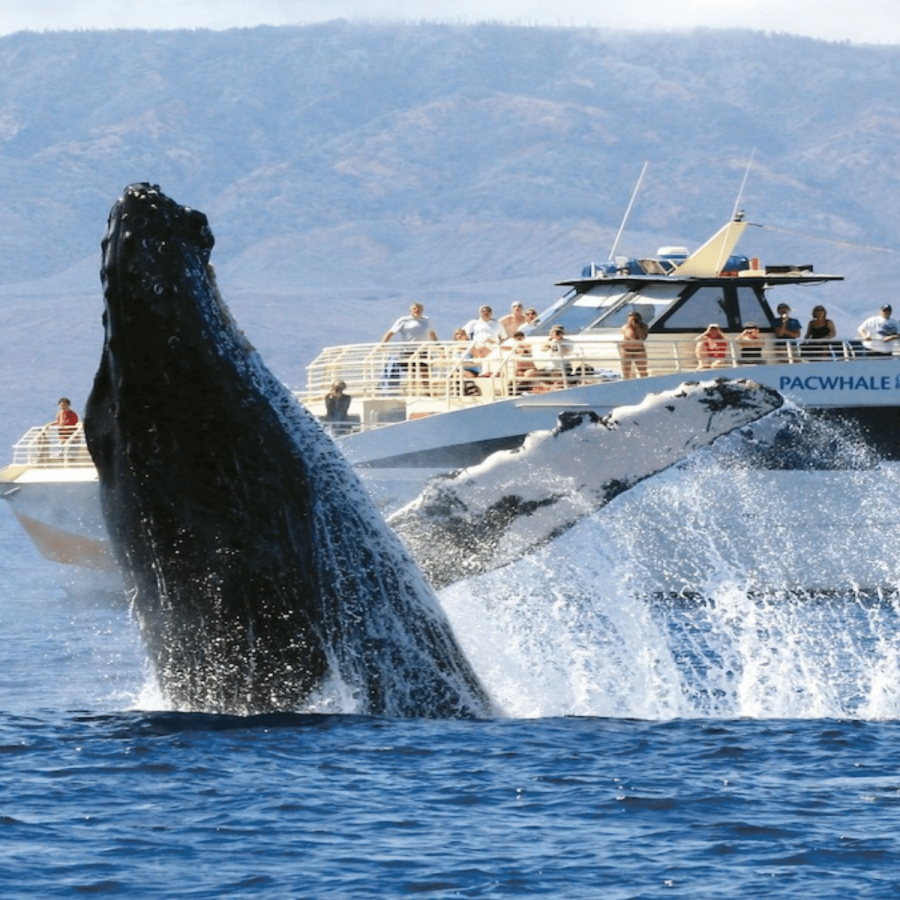
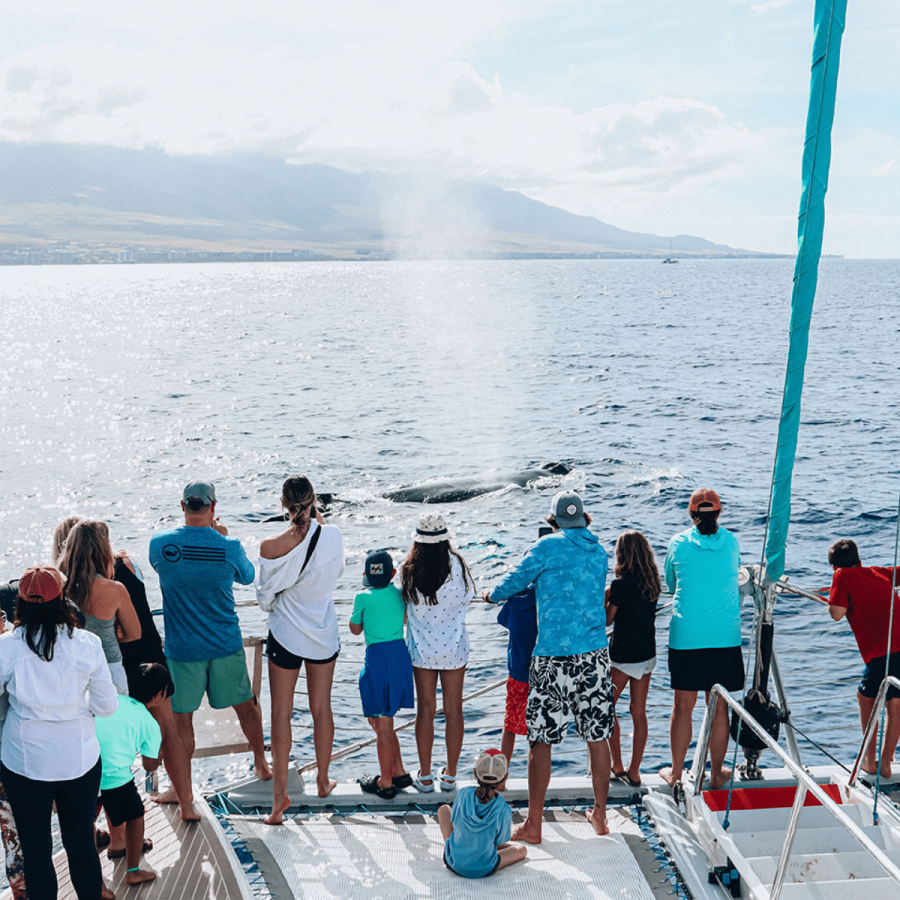
A large catamaran whale watch is the experience that defines Maui whale season for most visitors, and rightly so. The vantage point from the water is completely different from anything you can get from shore. You are out in the channel, surrounded by the same water the humpbacks are in, and when a 40-ton animal surfaces 30 feet from the bow, the scale of it is something no photograph fully prepares you for.
Pacific Whale Foundation runs outstanding whale watch tours from both Lahaina Harbor and Ma’alaea, with certified marine naturalists on board who bring real depth to what you are observing. Their crews identify individual animals, explain behaviors, and help you understand the science behind what you are watching. For a first whale watch, that context makes the experience substantially richer.
Teralani offers a premium sailing catamaran experience departing from Ka’anapali Beach, with a beautiful vessel and an open bar that makes it a naturally social outing. Both are excellent choices, and both operate on stable, comfortable platforms well suited for guests of any experience level.
Morning departures are strongly recommended. Ocean conditions are almost always calmer before the trade winds build, and the light on the water in the morning makes sightings easier to spot.
🐋 Day 2 tip: Bring layers. It is warmer on the beach than on the water, especially at speed. A light jacket and reef-safe sunscreen are both worth having even on a beautiful morning.
Day 3: Go Smaller and Wilder – The Raft Whale Watch
The catamaran experience is unforgettable. The raft experience is something else entirely.
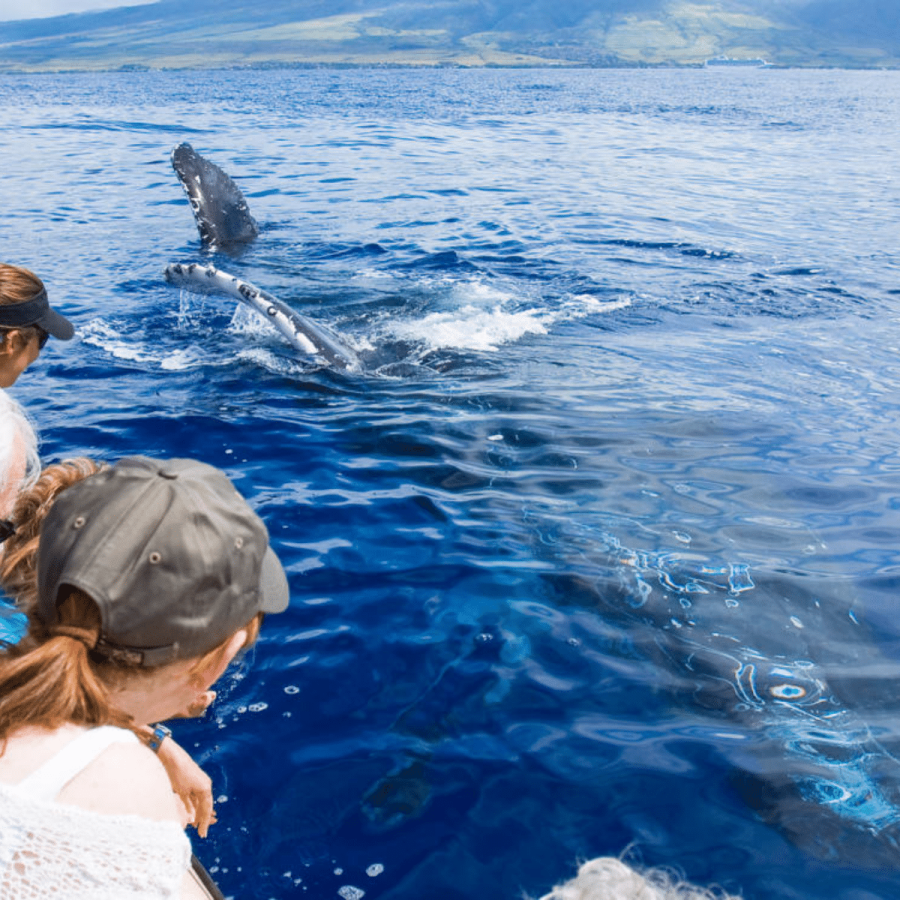
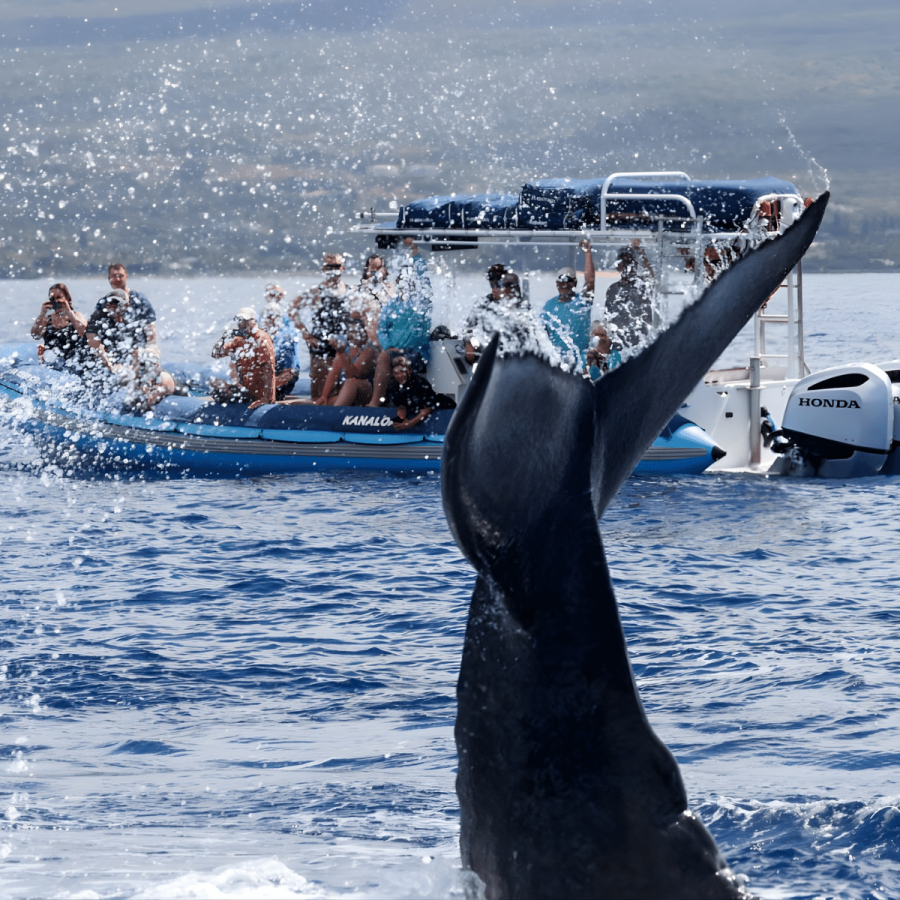
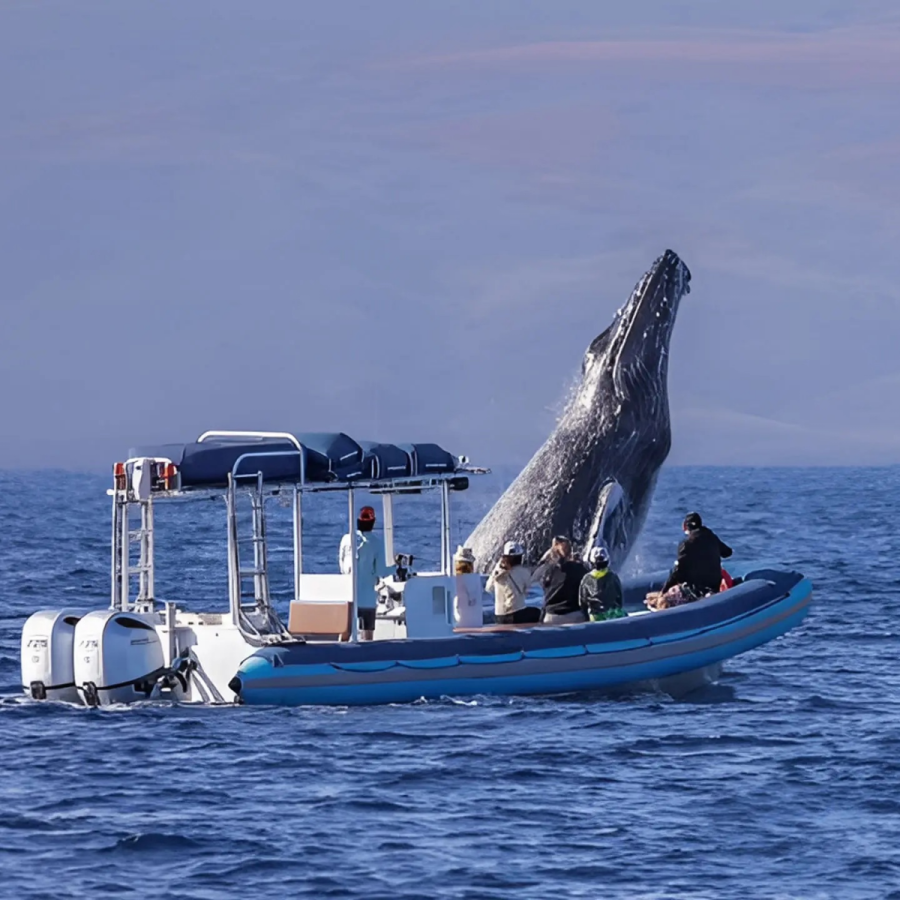
Rigid inflatable raft whale watches seat a small group of passengers, typically 12 to 24 people, low to the water on a vessel that moves fast and responds immediately. When a whale surfaces close by, there is nothing between you and it. No upper deck. No railings softening the view. Just open air, salt spray, and an animal the size of a school bus rolling through the water at arm’s length.
Some of our favorite raft whale watching tours are:
Small-group raft tours are run by experienced naturalists who know how to position the boat legally and responsibly while still giving passengers a genuinely close-up experience. These tours are not for guests with back or neck injuries, and the ride can be bumpy. Yet, for guests who want to feel genuinely immersed in the season rather than observing it from a comfortable distance, this is the upgrade.
This is also the experience that returning visitors who have done the classic catamaran tour tend to name as their favorite when they come back to Maui during whale season. It is worth doing both.
🐋 Day 3 tip:Rent a GoPro from Auntie Snorkel for the raft tour. The low, water-level perspective combined with how close the animals come makes for footage that is genuinely stunning and hard to replicate on a larger vessel.
Day 4: Paddle Out at Sunrise – Whales from a Board
This is the experience most visitors don’t know they can have, and the one that tends to become the story they tell when they get home.
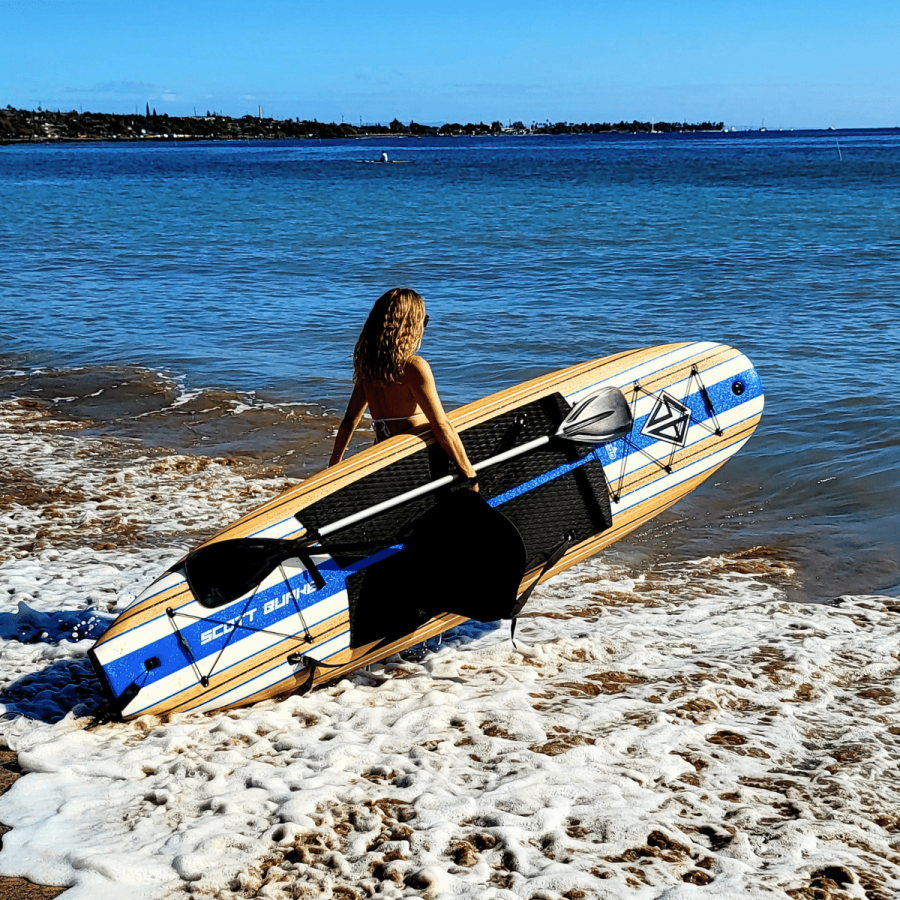
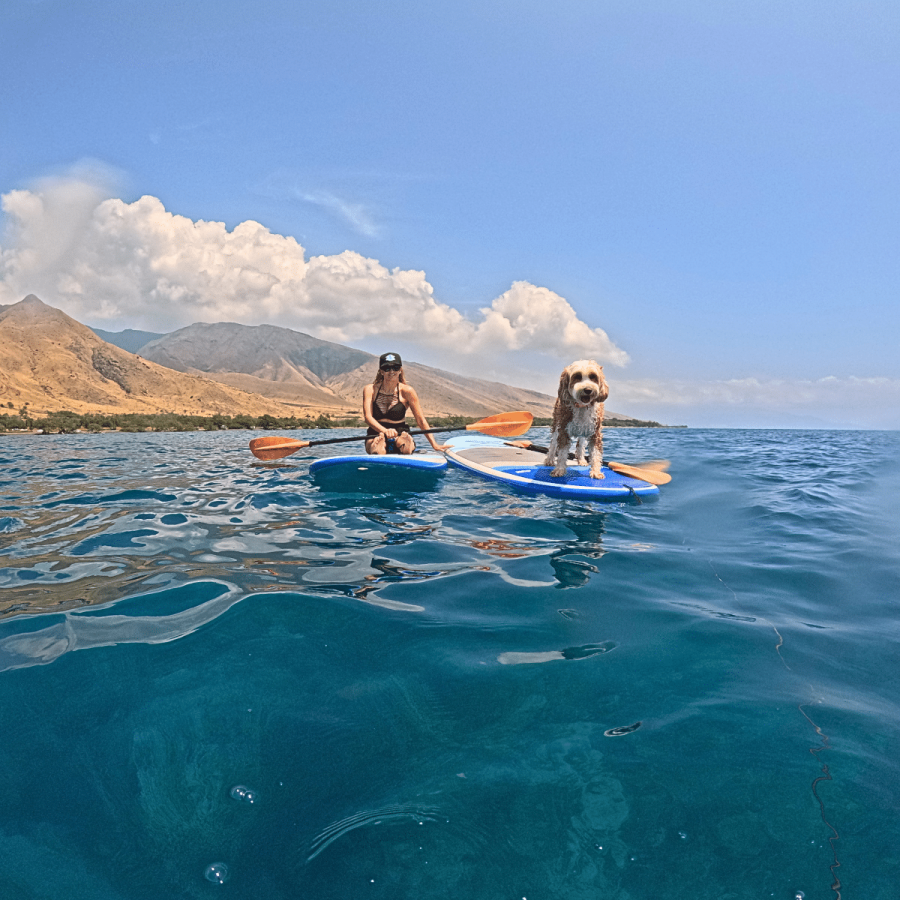
Humpbacks are frequently visible from the water during whale season, not just from tour boats but from kayaks, paddleboards, too. Setting your alarm early, renting a paddle board from Auntie Snorkel, and launching from one of South or West Maui’s calm-water beaches at first light puts you on the ocean at the same time the whales are most active near shore.
The experience is intimate in a way that no boat can fully replicate. You are low to the surface. The water around you is quiet. And when a humpback surfaces 100 yards out and exhales, the sound carries across the calm in a way that is hard to forget. You’ll hear them when they’re quite far away, and they know how to navigate a good distance around you. Just remember, it is prohibited to chase the whales or try to move yourself closer to them. Just relax and take in the scene around you.
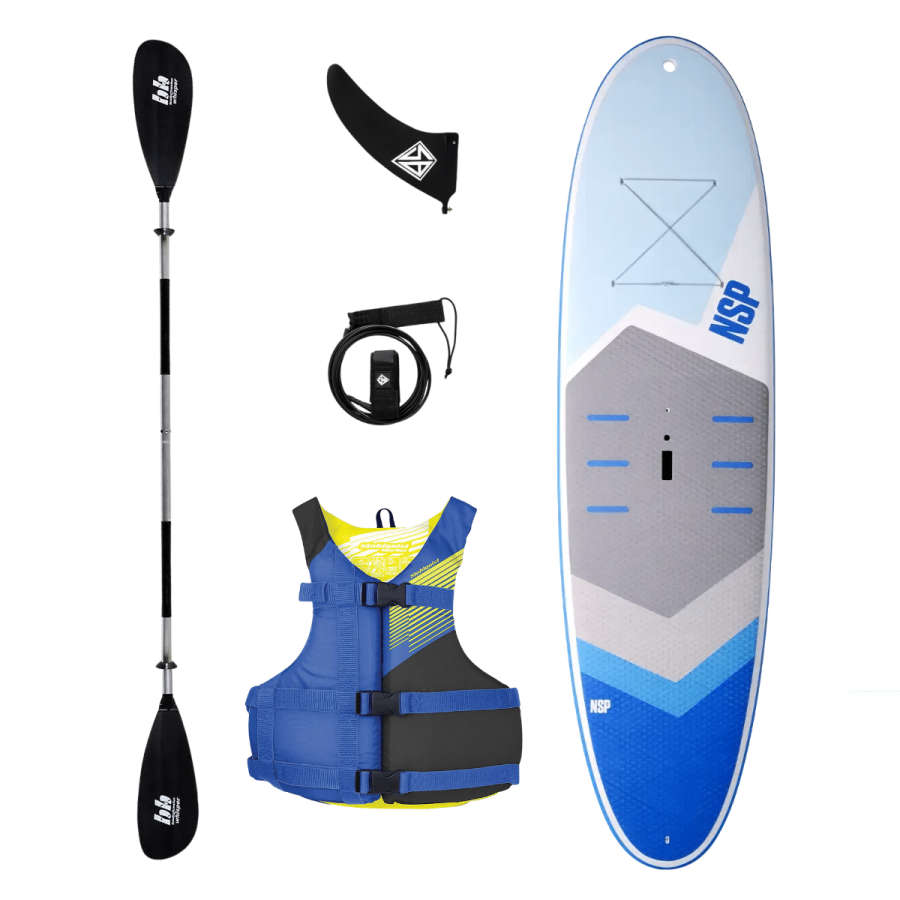
Stand-up paddle boards and sit-down paddle boards are both available for daily or weekly rental from our Kihei and Lahaina locations. Weekly rentals include free delivery, which is a nice option if you plan to get out on the water multiple mornings during your stay. Ask a Fun Specialist which beach is showing the calmest conditions that morning before you launch.
🐋 Day 4 tip: Federal law requires staying at least 100 yards from humpback whales in Hawaiian waters. If a whale approaches you, stay calm, keep your paddle still, and let the whales go about their day undisturbed.
Day 5: Snorkel and Hear Them Singing
Here is something most visitors to Maui during whale season never think to do, and yet it is one of the most remarkable sensory experiences the island offers: put your head underwater and listen.
Male humpback whales sing. Their songs are complex, evolving compositions that can last for hours and carry for miles through warm water. During peak whale season in Maui, the sound is actually audible while snorkeling at many beaches across South and West Maui. It is not a faint background hum. On active whale days, the sound is present and striking: a low, otherworldly series of calls and groans that carries through the water in a way that stops most snorkelers mid-kick the first time they hear it.
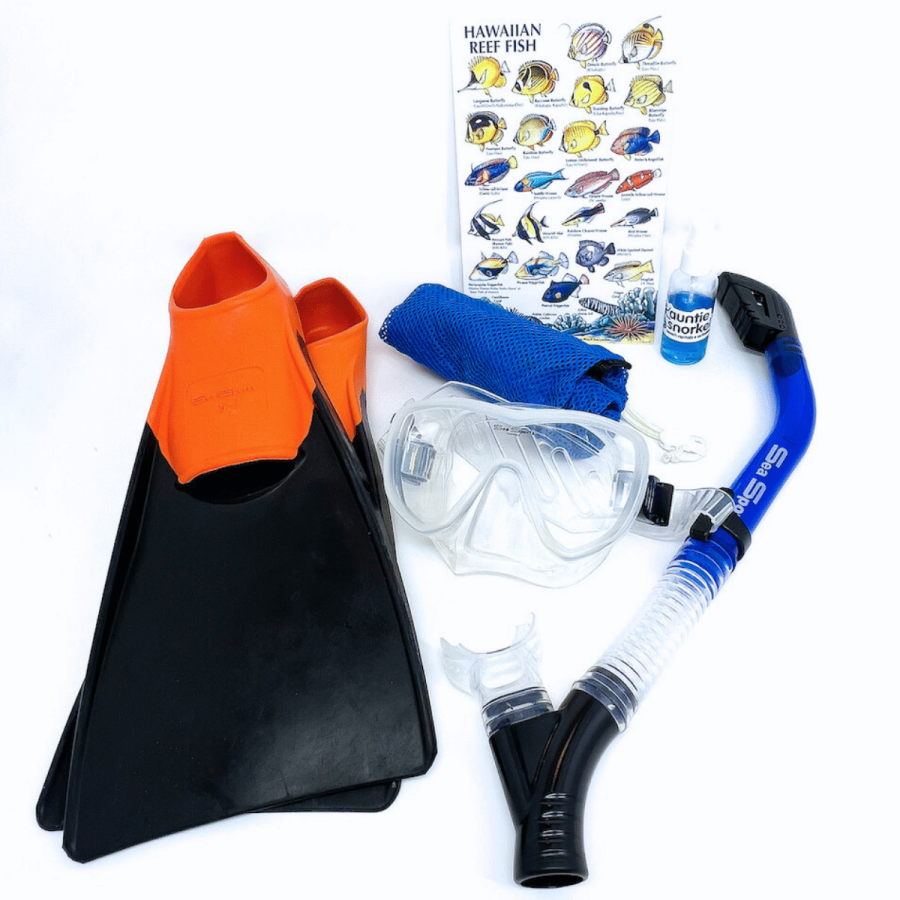
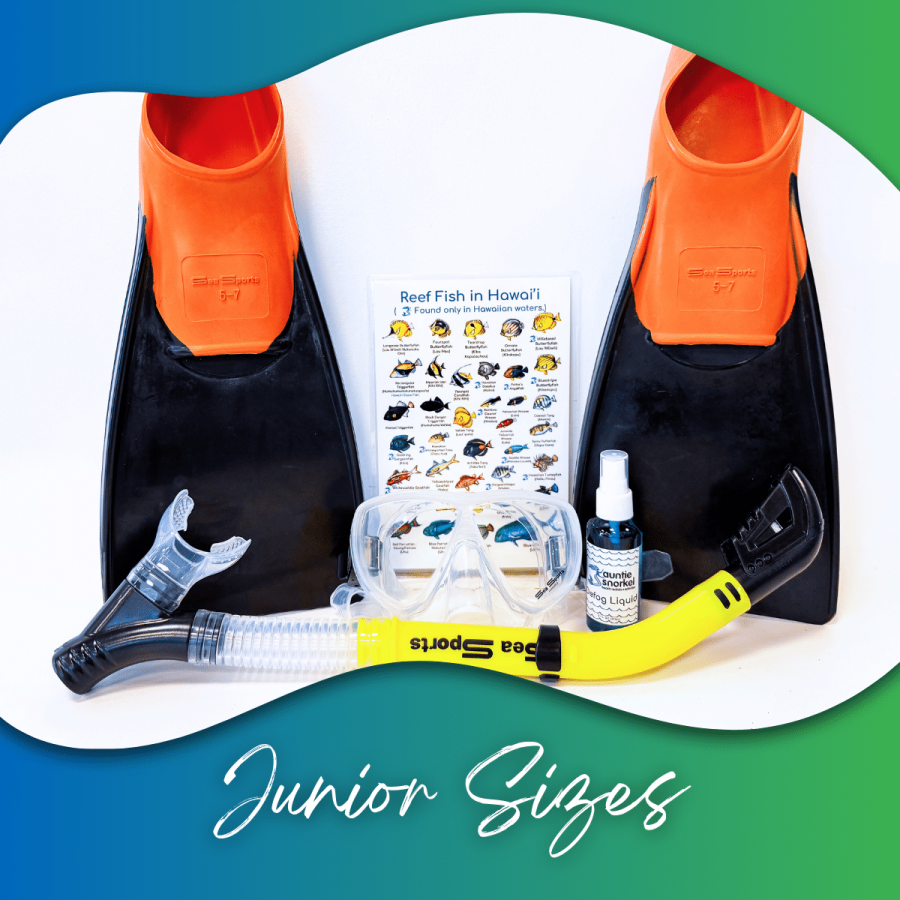
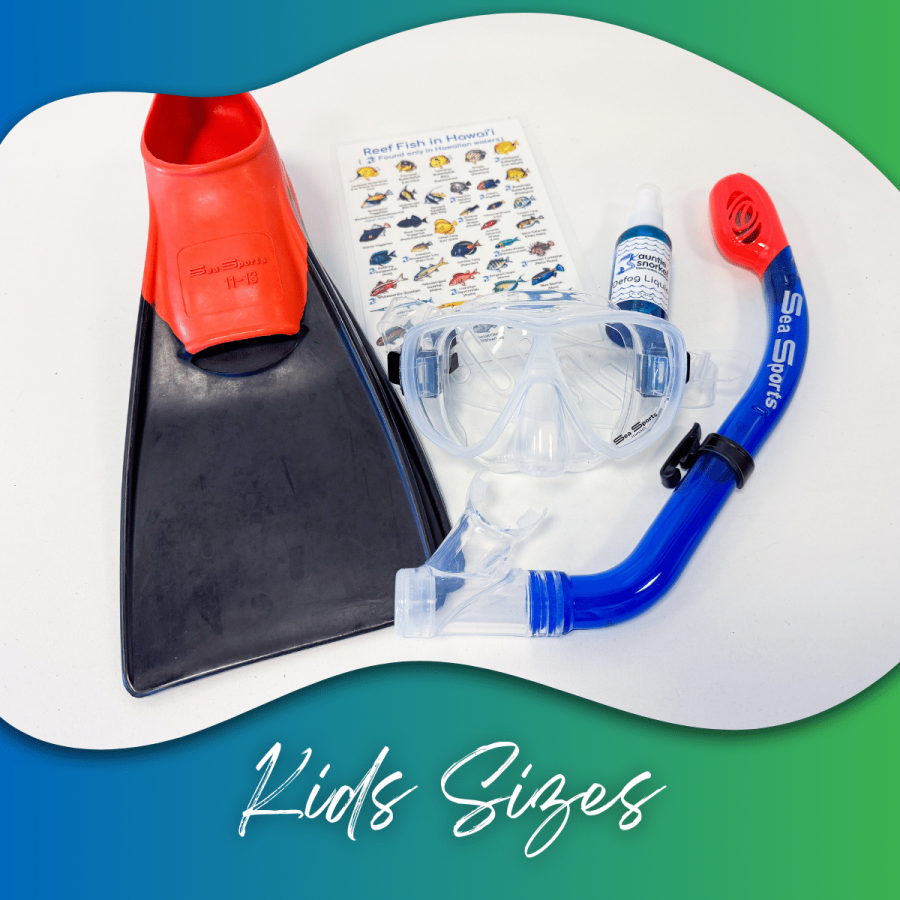
You don’t need to be on a boat to have this experience. A calm beach morning, properly fitted snorkel gear from Auntie Snorkel, and a willingness to float quietly for a few minutes is all it takes.
Premium snorkel gear, wetsuit tops for extended sessions, and GoPros are all available from either Auntie Snorkel shop. Stop in and ask a Fun Specialist which beach is calm that morning and what the swell is doing. Getting the right spot on the right morning is what makes this experience everything it can be.
For those who want an offshore snorkeling experience alongside the whale season magic, Blue Water Rafting runs a combined whale watch and Molokini snorkel tour during the season, and they carry a hydrophone on board so passengers can listen to whale song directly from the boat. It is a remarkable combination of two of the season’s best experiences in a single morning.
🐋 Day 5 tip: The whale song is more audible when you can dive under the surface a little. Choppy conditions create surface noise that masks the sound. An early morning snorkel on a settled day gives you the best chance of hearing it.
Day 6: Become a Whale Scientist – Citizen Science Day
It turns out that observing whales and contributing to actual scientific research are not two different things on Maui.
Every January, the Pacific Whale Foundation hosts the Great Whale Count, a volunteer effort that takes place simultaneously from shores and vessels across Maui. Participants need no scientific background, just a spot on the coast, a pair of eyes, and a commitment to watch for a few hours and log what they see. The count generates one of the most comprehensive annual datasets on humpback whale distribution and behavior in Hawaiian waters. Signing up is free, and it is one of the most genuinely local, community-minded experiences available during the season.
Outside of the January count, the Happy Whale project allows anyone with a fluke photo to contribute to a global whale identification database. When you submit a photo, the AI system searches millions of records to tell you whether your whale has been seen before, and if so, where. Some animals tracked in Maui have been matched to sightings in Alaska, California, and Mexico. It is the kind of connection that makes a vacation feel like participation.
You do not need to be on a research vessel. Any of the whale watches from Days 2 and 3 put you in a position to get a usable fluke photo. Upload it to Happy Whale afterward, and your morning on the water becomes part of the permanent scientific record. We hope your fluke photos get a match, because we were over the moon to find the history of our own fluke photo here!
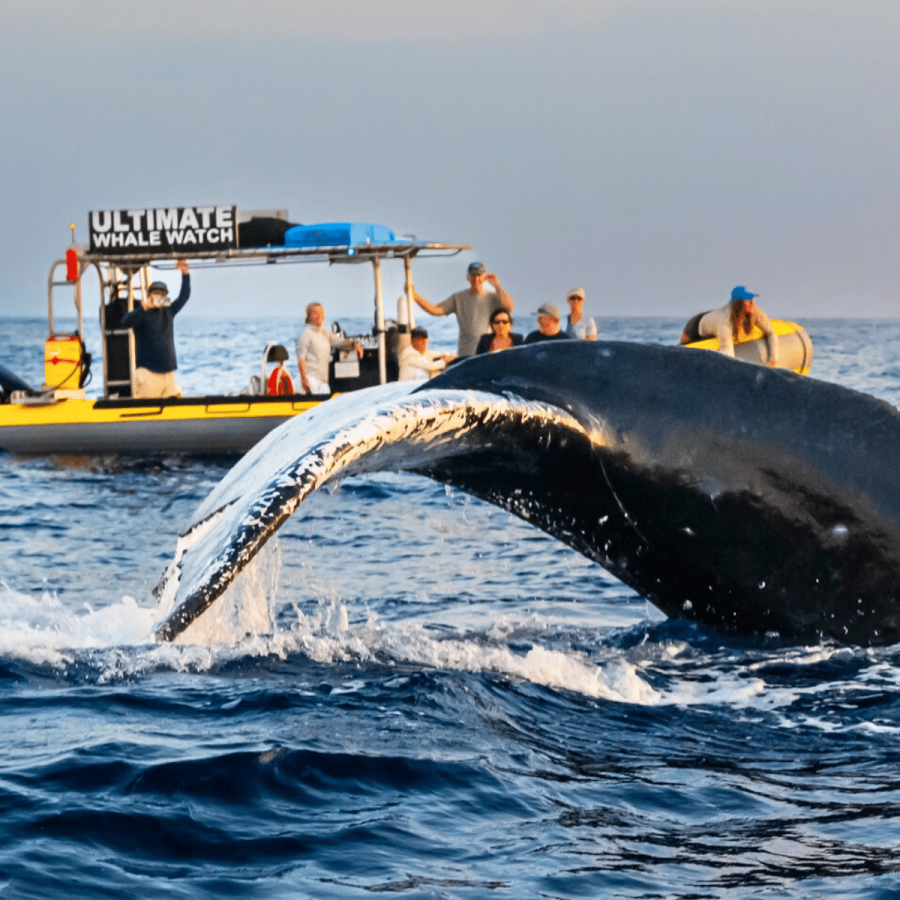
🐋 Day 6 tip: For the best fluke photos, focus on the moment just before the whale dives. As a humpback arches down into a deep dive, the tail lifts clear of the water and the full underside pattern becomes visible. That pattern is what makes each animal unique.
Day 7: Sunset Send-Off – The Perfect Last Evening
There is a particular kind of Maui evening that stays with you: golden light on the channel, the West Maui Mountains turning amber, the ocean going glassy as the trades ease off, and somewhere out in the water, a fluke rising and disappearing without ceremony.
A sunset cruise on the last evening of a whale season week ties everything together beautifully. You have spent the week experiencing the humpbacks from every angle: from shore, from a catamaran, from a raft, from a paddle board, and underwater. An evening on the water as the sun sets over the channel is a natural close to that arc.
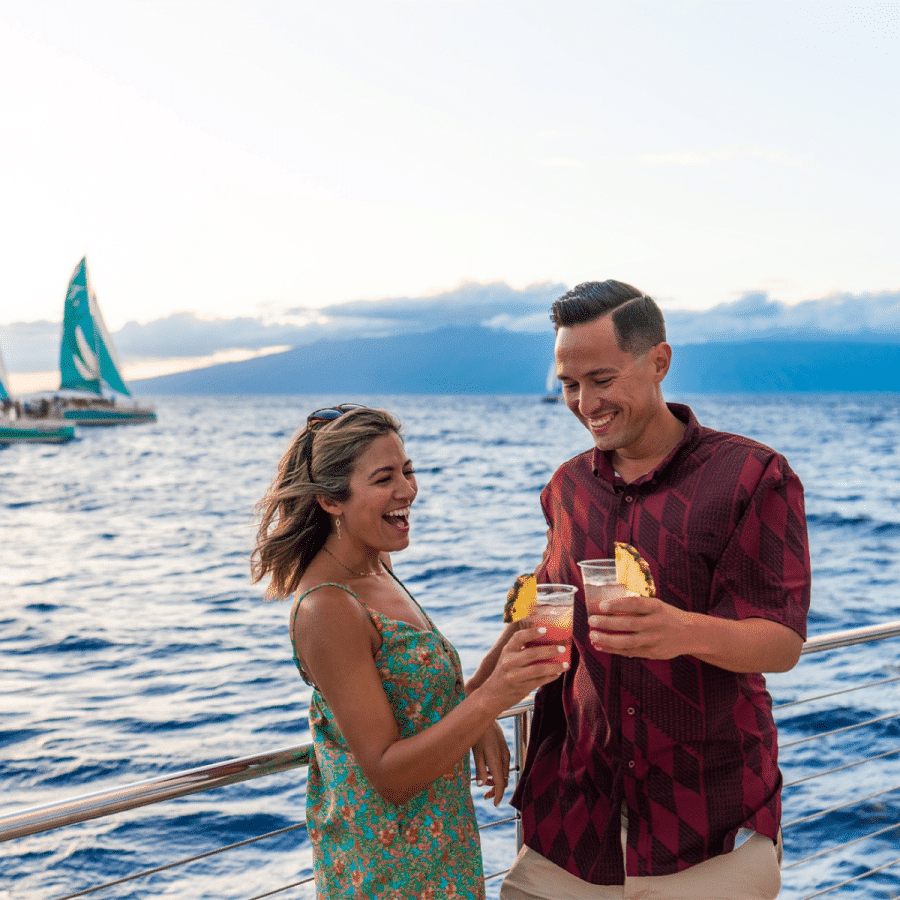
Teralani offers a beautiful sailing sunset experience from Ka’anapali Beach, with open bar and a relaxed, social atmosphere. Calypso runs popular dinner cruises from Ma’alaea with live music and dinner on the water. During whale season, whale sightings on sunset cruises are common, and while they are not guaranteed on any tour, the channel at dusk during peak season is as good a place as any to find them.
🐋 Day 7 tip: Sunset cruises during whale season book quickly, especially on weekends and holidays. Secure your spot a few days in advance rather than waiting until the last evening to look for availability.
Making the Most of Whale Season: What to Know Before You Go
A few things worth knowing before you book:
Whale season runs November through April. Peak activity, meaning the highest numbers of animals and the most dramatic behaviors, tends to fall between mid-January and mid-March. Early season brings the first arrivals and a certain electricity of anticipation. Late season brings mothers with new calves, which is extraordinary to witness. No part of the season is a bad time.
Mornings are almost always better than afternoons for ocean-based whale activities. Ocean conditions calm down at night and are typically at their smoothest in the first few hours after sunrise. Tours and paddling sessions planned for early morning give you calmer water, better visibility, and more active whale behavior near shore.
No sighting is guaranteed. Every responsible tour operator in Maui will tell you this honestly, and it is worth hearing: humpback whales are wild animals in a large ocean. Tour operators know their waters and their season, and sighting rates during peak months are genuinely high, but the magic of this experience is exactly that it is not scripted.
Book early. Whale season is one of Maui’s most popular travel periods. Morning departures from established operators can fill weeks in advance. If you have specific dates in mind, securing your whale watch and your sunset cruise before you arrive is strongly recommended.
Auntie Snorkel is here every step of the way. Our Fun Specialists in Kihei and Lahaina have lived and worked through Maui whale seasons for years. Stop in to pick up gear, talk story about conditions, and get real-time local advice on which experiences are showing the most activity that week. We can help you make the most of wherever you are in this list.
Frequently Asked Questions About Maui Whale Season
When exactly does whale season start and end in Maui?
Humpback whales typically begin arriving in Hawaiian waters in October and November, with numbers building through January. Peak season runs roughly mid-January through mid-March. By April, most whales have begun their migration back to Alaska, though some linger into May. Browse current whale watch tours here.
Is whale watching safe for children?
Yes. Large catamaran tours are well-suited for families, with stable platforms, life jackets, restrooms, and crews experienced in working with guests of all ages. Raft tours are more adventurous and may not be suitable for young children or guests with physical limitations. Check individual tour requirements when booking.
Can I really hear whale songs while snorkeling?
Yes, and it is one of the most remarkable sensory experiences of whale season. Male humpback whale songs carry for miles through water and are frequently audible while snorkeling at calm beaches across South and West Maui during peak season. Diving a little under the surface during early morning sessions on settled days will give you the best chance of hearing it clearly.
How close do the whales come to shore?
Humpbacks regularly travel within a few hundred yards of the coastline throughout their time in Maui. Shore spotting is genuinely productive, particularly from elevated points like Papawai Scenic Lookout. Paddleboards and kayaks often encounter animals within viewing distance. Federal law requires maintaining at least 100 yards of distance; if a whale approaches you, stay still and let the whale navigate expertly around you.
What gear should I bring on a whale watch?
Layers for the wind, reef-safe sunscreen, polarized sunglasses to cut the surface glare, and a camera or GoPro rental for fluke photos you can submit to Happy Whale afterward. Binoculars are worth having on larger vessels where you may be watching animals at distance.
Do I need to book whale watches in advance?
Yes, especially during peak season (January through March) and holiday weeks. Morning departures on popular vessels fill quickly. Booking at least a week ahead is wise; for holiday dates, booking several weeks ahead is better. Browse and book all Maui whale watches here, always at Auntie’s Best Price Guaranteed.
Subscribe to Auntie Snorkel’s Free Newsletter
About
Auntie Snorkel
Auntie Snorkel shop has been serving Maui’s fun seekers since 1985. We're the original South Maui Snorkel Shop.
When I bought the shop in 2004 from the original Auntie, we decided to keep the name. The name "Auntie" is a term of respect here in Hawaii. I'm living my dream. I get to meet awesome people from all over the world and share with them my love and knowledge of this magical island that I get to call home.
We know all the spots. I have lived here since 2001. We're the true definition of a family owned and operated shop. I answer the phones and work the shop along with my family. When you shop with us you're supporting my ohana and for that I thank you!! Why go anywhere else? We're the friendliest, fastest, cheapest and our locations are the most epic! Mahalo and Aloha. ~Mark Noble (Owner & Maui Fun Specialist)
Great customer service by both staff members that were at the Kihei location! Rented a snorkel set and boogie board and got a bonus free boogie board for our kids to use. Callie also gave us some great tips and beaches to try out that were kid friendly for snorkelling and boogie boarding. Highly recommend!
Chris L.
1 day ago
Jay was very helpful when we picked up all of our gear and helped show us the best places to snorkel with a map. The whole process with pickup and drop off was quick and easy. Highly recommend renting from Auntie Snorkel
Heidi F.
1 day ago
We stayed in a hotel in Wailea and rented chairs and an umbrella for the week to explore beaches to snorkel. Easy pick up and drop off! Highly recommend Auntie Snorkel - friendly staff too! We will rent again in the future.
Paul P.
2 days ago
These guys are the best!! You can rent stuff here and return at their other location, which we did because we moved hotels.
We had our own masks and snorkels and just needed swim fins. I walked in here figuring they would want us to rent an entire package. NOPE, they rented us just the fins, didn't try to upsell me on anything at all, and recommended a nearby beach to go snorkeling. We went to this beach and on our first snorkel of the trip we saw an Octopus and a Sea turtle! Gave us a 2 day rental and even extended the time a couple hours so we had plenty of time to return them. Prices were very reasonable too. Even though we just had fins they provided a mesh bag which we used to put everything else in.
VERY chill and cool. I tried on a size 9 fin and it was too large so had to go to a size 8-9. It needs to be tight because the water will make it loosen up.
Not our first time snorkeling but first time renting and when I go back if I need to rent I am coming here. Give the local guys your business! They've even got a live cam of the local beach on a screen.
Kavya U.
3 days ago
The snorkeling gear rental experience was seamless and they fit the gear to your face frame